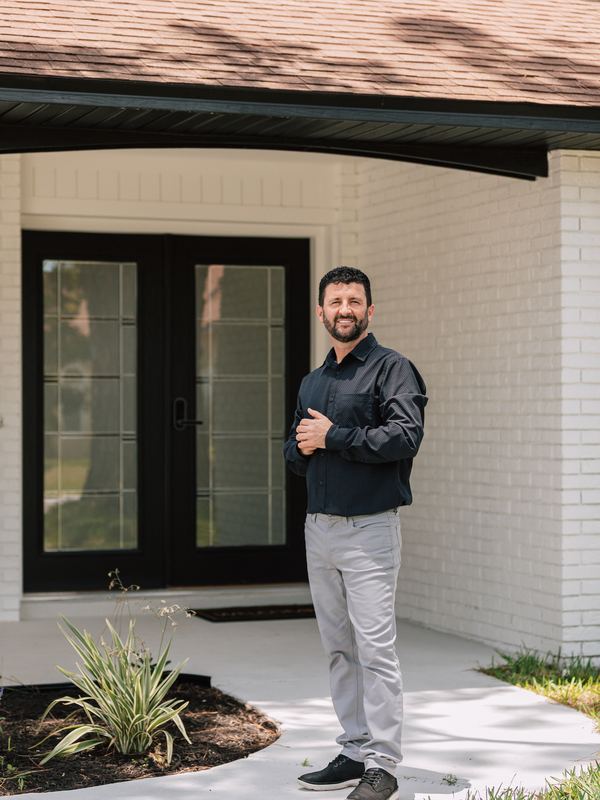
A Palm Coast Homeowner Question

Do I need to replace my roof
before selling my house?

Need to sell quickly? Talk to me directly

Seller questions › Replacing the roof before selling
Not always. But know who can buy it first.

You can sell a house in Florida with an old roof. But a buyer with a mortgage has to get the house insured before the lender will close. On an older Florida home, the insurance company wants to know four things: how old the roof is, and what shape the electrical, the plumbing and the AC are in. If the buyer can’t get it insured, they can’t get the loan, and your house becomes cash-only. The good news is you can find out all of it before you list, for a lot less than one lost buyer costs you.

When your house becomes cash-only

Most buyers need a mortgage, and no lender will close on a house the buyer can’t insure. So if the roof is too old, or the panel or the plumbing fails the 4-point, every buyer who needs a loan drops out at once. What’s left is cash buyers, and buyers who will take it on terms.

That’s a much smaller group, and they know it. It’s why a house that looks fine can sit for months, or go under contract and fall apart three weeks later when the buyer’s insurance quote comes back. The seller usually hears it last.

Do you need to replace the roof before you sell? Not always. Sometimes replacing it brings every financed buyer back and pays for itself. Sometimes a credit, a lower price or selling on terms makes more sense. The point is to know which situation you’re in before you list, not after the first buyer walks.

The roof rules, in plain words

Under 15 years old: Florida law says an insurance company can’t refuse to cover a home just because of the roof’s age.

15 years or older: the insurer can ask for an inspection. If the inspection shows the roof has at least five years of life left, they still can’t refuse it for age alone.

Citizens, the state’s insurer of last resort, asks for a 4-point inspection on homes 20 years or older, and more paperwork on shingle roofs 25 years or older.

So an older roof doesn’t make a house uninsurable. It makes it uncertain, and uncertainty is what scares buyers, lenders and their agents. One house I walked this month had a 2023 roof, and the insurance was quoted around $1,400 to $1,500 a year. A newer roof is one of the easiest things a buyer can see on paper.

My insurer wants a new roof, and I can’t afford it.
What can I do?

First find out what the insurer is actually asking for. A notice, an inspection request and a true replacement requirement are three different things.

1. Read the notice closely
Is it a request for an inspection, a list of repairs, or a notice that the policy won’t renew? For a home policy, Florida requires at least 120 days’ notice before a nonrenewal or cancellation, with the reason stated. Ask your agent or the insurer which one you have, and what exactly would satisfy them.
2. Know the age rules
If the roof is under 15 years old, the insurer can’t refuse to issue or renew the policy just because of its age. If it’s 15 or older, the insurer has to let you get a roof inspection, at your cost, before it can require a replacement. If that inspection shows at least 5 years of useful life left, the insurer can’t refuse to renew because of the roof’s age alone.
3. Get your own inspection from someone the insurer accepts
The inspector has to be approved by the insurer: a licensed home inspector, a licensed general, building, residential or roofing contractor, an engineer, an architect or a certified building code inspector. Ask the insurer who it accepts before you pay for one.
4. Ask whether a repair would do
Sometimes the concern is a specific problem, like a leak or damaged section. Ask whether fixing that is enough, and get the answer in writing.
5. Shop the policy
Another company may look at the same roof differently. A licensed independent agent can check several, and Citizens has its own roof rules, covered above.

Help paying for a roof in Flagler County

Flagler County’s roof program covers homes where insurance requires replacement, the roof is leaking, or it has less than six years of life left. It pays up to $25,000 as a loan forgiven over five years, for owners who live in the house, carry a homestead exemption and have household income up to 80% of the area median. It isn’t emergency help: the county says a wait of six months to a year is common, there is a waiting list, and if you sell before the loan is forgiven, the rest is repaid at closing. Homes in foreclosure or behind on the mortgage don’t qualify. Details on the county’s Home Repair Assistance page, or call 386-586-2324.

The state’s My Safe Florida Home program offers free wind mitigation inspections and, for homeowners who qualify, grants of up to $10,000 toward upgrades that include roof improvements. Eligibility depends on income and the home, and the program says grants depend on available funding.

For questions about a notice from your insurer, the state’s Insurance Consumer Helpline is free at 1-877-693-5236.

If keeping the house is getting hard to afford overall, here’s how to compare staying and selling with your own numbers.

What a 4-point inspection looks at

It isn’t a full home inspection. It’s the four things an insurance company cares about most.

1. The roof
Age, material, leaks and damage. Asphalt shingles are usually expected to last somewhere around 15 to 20 years.
2. The electrical
The panel and the wiring. Some older panel brands, like Federal Pacific and Zinsco, are flagged often, and so is old aluminum wiring.
3. The plumbing
The pipes and the water heater. Polybutylene and old galvanized pipes are the common problems, and a water heater past 10 to 15 years gets noticed.
4. The heating and cooling
The age and condition of the AC and heat. A working, dated system is usually fine. A failing one isn’t.

What I’d do before you list

Get your own 4-point inspection first. Then you know what a buyer’s insurance company will see, weeks before they see it, while you still have time to decide what to do about it.

Get a wind mitigation inspection too. It checks things like how the roof is attached and whether the windows and doors are protected, and it can lower the insurance premium. It’s good for five years, so a strong one becomes a selling point: the buyer’s monthly cost goes down.

Gather the paperwork. The roof permit or receipt with the date, the AC install date, a photo of the electrical panel label, and any permits for work you’ve done. Put them in one folder for your agent. A buyer who can see the answers doesn’t have to guess.

If something doesn’t pass

An old roof or an old panel isn’t the end of the sale. You have more options than you think, and the choice is yours.

Option One

Fix it before you list

Replace the panel, the water heater, or the roof if it’s truly at the end. It removes the question completely, and a new roof is something every buyer and every insurer can see.

Option Two

Price for it, or offer a credit

Leave it as it is and give the buyer a credit at closing, or price the house knowing the roof is part of the deal. Your agent can show both ways with the numbers.

Option Three

Sell to a cash buyer

A cash buyer doesn’t need a lender’s approval, so the insurance question doesn’t hold up the closing the same way. It’s usually the fastest, and usually a lower price.

Option Four

Sell it on terms

If the house is paid off or close to it, you can sell at a full price and receive monthly payments, while the buyer takes on the roof and the repairs. You keep your price. I lay out all the options side by side, and you decide which one fits you.

See what you’d walk away with, repairs and all.

Put in the house, the condition, and what it costs you to hold it each month, insurance included. My calculator shows what you’d actually walk away with if you list it, take a cash offer, or sell it on terms, side by side.

It takes two minutes, nobody has to walk through your house, and no one calls you.

Run my numbers →
Robert T. Szigeti

Still have questions? Just ask.

I’m Robert. I’ve spent years doing this, buying, fixing, and figuring out the honest way through situations like yours. If something here didn’t quite fit your house, or you just want to talk it through with a real person before you decide anything, reach out. No pressure, no obligation, and it won’t cost you a thing to get a straight answer.

Robert T. Szigeti · Investor · Problem Solver · Palm Coast, FL
Close to Home

A few local things worth knowing. Palm Coast and Flagler County housing news, development updates, and my take, every other week. Read the first issue

Sign up for Close to Home
Tell me what's going on.

I'll personally call you back within a few hours. No pressure, no obligation, just a real conversation.

Easier said than typed?
Just tell me your story.

Some situations don't fit in little boxes. Press the button and talk to me like I'm sitting across your kitchen table. Say it however it comes out, take your time. I'll listen to every word before I ever call you back.

The more you tell me, the faster we get to your solution. Things like:

What's going on with the house?

What matters most to you right now?

If you had a magic wand, what would you wish for?

Tell Me™

Tap to start talking
I'm listening. Tap the square when you're done.
0:00

Here's your message. Listen back if you'd like, then send it, or record it again. Nothing goes anywhere until you say so.

Got it. I'll listen today.

Thank you for trusting me with your story. I'll hear you out, start to finish, and call you back personally.

Your recording comes to me and no one else. It's never posted, shared, or made public. And listening costs you nothing. No pressure, no obligation.