A Palm Coast Homeowner Question

Why is my house not selling?
Look at what’s next door.

Seller questions › House not selling
It’s usually not your house.

It’s what the buyer saw right before they walked into yours. In Palm Coast right now, that is very often a brand new house a few minutes away, at almost the same price, with the builder paying for part of the loan. When nobody is coming to look, or they come and nobody makes an offer, it almost always comes down to one of three things: the new build down the road, a price set against the wrong houses, or condition that buyers are comparing against new. Let me walk you through all three, plainly, and then every option you actually have.

What’s normal in Palm Coast right now

A typical Palm Coast house takes about 77 days to sell, and it closes at about 97.6 percent of the asking price. That’s from Redfin’s August 2026 numbers. So if you’ve been listed three weeks with no offer, that alone isn’t a crisis. If you’ve been listed four months, it’s telling you something.

Here’s the part most sellers never hear. There are roughly 500 brand new homes for sale in and around Palm Coast right now, across dozens of communities. And the builders are not waiting. Nationally, about a third of builders cut their prices in August, by about 6 percent on average, and close to two out of three are paying incentives: help with the interest rate, closing costs, upgrades. For the first time in about fifty years, a new house can cost the buyer less than a used one.

That doesn’t mean your house is worth less than you think. It means the buyer walking through it has a very good option ten minutes away, and your price, your photos and your condition all get measured against it.

Walk your own street

Before you change anything, find out what a buyer in your price range is actually looking at. You can do most of this yourself in an evening.

What’s listed within a mile of you
Same size, same age, same price range. How many are there, and how long have they been sitting?
What’s being built nearby
Drive the closest new communities. Look at the starting price, the square footage, and what’s included.
What the builder is throwing in
Rate buydowns, closing costs paid, cash toward upgrades. That money is part of the real price the buyer is comparing to yours.
What actually sold in the last 90 days
Not what’s listed. What closed, for how much, and how long it took. Your agent can pull this in five minutes.
How your house compares, honestly
Carpet against new floors, a tub against a walk-in shower, a bright bedroom against white walls. Buyers notice all of it, in the first minute.
What I found when I checked, September 2026
Ryan Homes at Seminole Palms from $278,990 and advertising “save up to $60,000” through 9/30. D.R. Horton’s Sawmill Branch from $279,400 with a special introductory rate on select homes. Maronda’s Enclave at Seminole Palms from the $289s with $20,000 to $30,000 on select move-in ready homes. KB Home’s Somerset from $236,990. These offers change month to month, so check them yourself.

Two houses I’ve watched go through exactly this

The first one was mine. A smaller house in the P section, about 1,200 square feet, everything done. I had it priced about $15,000 under a brand new house nearby, and it still would not move. Buyers kept choosing the new one. The new build came with a builder warranty, incentives, and the builder paying down their interest rate. That’s why people go for new.

The second one I walked through with the listing agent this month. A four bedroom, almost 2,000 square feet, new roof in 2023, good bones. On the market since May. The owner moved up north to be with family, and the house has sat empty since. Inside: carpet, a red bedroom, yellow walls, an old bathroom with no shower. A few minutes away, a 2,100 square foot new build sold for $329,000. That’s the house every buyer compared it to.

Neither house had anything wrong with it. They just had a neighbor nobody told the seller about.
Your honest options

There is no one right answer. It depends on how much time you have, how much money you can put in, and what you need out of it.

Option One

Price it clearly under new

Not a little under. Enough that a buyer standing in the model home thinks of yours first. This is the fastest way to move it, and it often costs less than you fear once you add up what three more months of payments would cost you anyway.

Option Two

Fix only what buyers compare

Not a remodel. Neutral paint, new flooring where there’s carpet, a shower where there’s only a tub. The few things a buyer holds up against a new build. A few thousand dollars in the right places can matter more than a big price cut.

Option Three

Rent it and hold

A four bedroom in Palm Coast can rent for around $2,000 a month. If you don’t need the money now, renting until the new communities sell out can be the patient choice. But be honest with yourself: tenants, repairs and a property manager are a job, and some owners just don’t want it.

Option Four

Sell it on terms

If the house is paid off or close to it, you can sell at a full price and let the buyer pay you over time, with money down and a monthly payment. You get your price, and the payments come to you instead of going to a bank. I bought a house in the C section this way: full price of $330,000, $20,000 down, and $1,500 a month, all of it going to principal. Because they wanted a big down payment, I asked for 90 days with no payment while I put in the missing floor, painted and cleaned it up. I lay out all three, listing it, a cash offer, or terms, with the numbers side by side. Which one is right is your decision.

Should I lower my price, and when?

Here’s what I tell sellers: give a new listing about two weeks. The first two weeks are when the most buyers see it. If very few people come through in that time, or nobody comes back for a second look, the market is already answering you.

Then don’t just drop the price. Look at why first. And remember every month it sits costs you real money: the mortgage if there is one, the taxes, the insurance, the lawn, the power. A $10,000 price change that sells it two months sooner can put more in your pocket than holding out.

What your agent should be telling you

A good agent is worth every dollar, and I work with a lot of them. But you should be getting real feedback, not just “the market is slow.” Here’s how to read what’s happening:

Lots of showings, no offers

Buyers like the location and the photos, then something inside or the price stops them. Ask what they said.

Very few showings

The price, the photos, or the first line of the listing is losing to the homes around it online.

Offers well under asking

That’s the market telling you its number. You don’t have to take it, but don’t ignore it either.

Deals that fall apart at inspection

Something in the house is scaring buyers or their insurance company. Roof age, the AC, old plumbing. Find out what, and whether it’s cheaper to fix than to keep losing buyers.

Real feedback sounds specific. An agent in Phoenix told me once, about a listing of hers, “It’s the driveway, that’s the biggest feedback we’ve had.” That’s the kind of answer you should be getting. If you live out of state, or you inherited the house and you’ve never seen it listed, ask your agent for those numbers every two weeks: how many showings, how many second looks, and what people said.

What does every month it sits cost you?

Put in your house and see what you’d actually walk away with, and what each month on the market is quietly taking out of it. Mortgage, taxes, insurance, utilities, lawn, all of it, next to the price. So the decision about lowering the price, fixing something, or trying another way is based on your real numbers, not a guess.

It takes two minutes, nobody has to walk through your house, and no one calls you.

Show me my numbers →
Robert T. Szigeti

Still have questions? Just ask.

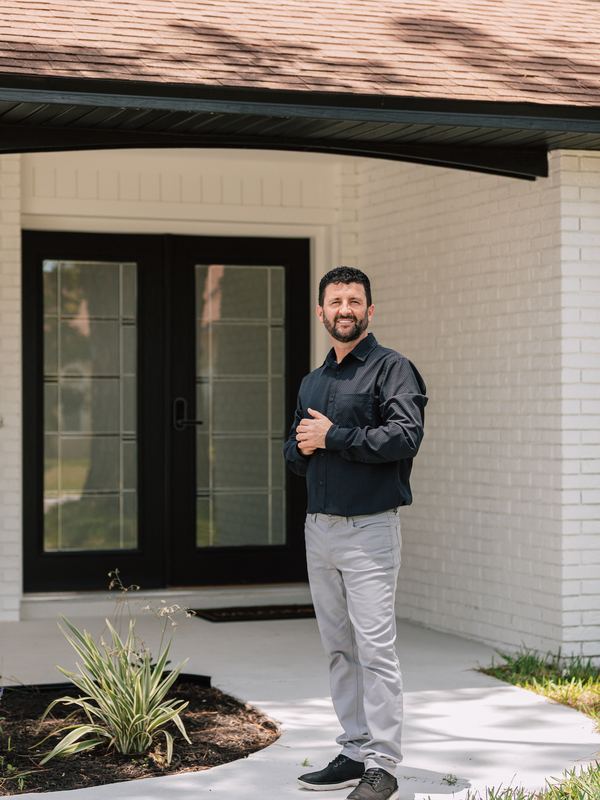
I’m Robert. I’ve spent years doing this, buying, fixing, and figuring out the honest way through situations like yours. If something here didn’t quite fit your house, or you just want to talk it through with a real person before you decide anything, reach out. No pressure, no obligation, and it won’t cost you a thing to get a straight answer.

Robert T. Szigeti · Investor · Problem Solver · Palm Coast, FL
Easier said than typed?
Just tell me your story.

Some situations don't fit in little boxes. Press the button and talk to me like I'm sitting across your kitchen table. Say it however it comes out, take your time. I'll listen to every word before I ever call you back.

The more you tell me, the faster we get to your solution. Things like:

What's going on with the house?

What matters most to you right now?

If you had a magic wand, what would you wish for?

Tell Me

Tap to start talking
I'm listening. Tap the square when you're done.
0:00

Here's your message. Listen back if you'd like, then send it, or record it again. Nothing goes anywhere until you say so.

Got it. I'll listen today.

Thank you for trusting me with your story. I'll hear you out, start to finish, and call you back personally.

Your recording comes to me and no one else. It's never posted, shared, or made public. And listening costs you nothing. No pressure, no obligation.